



لوازم یدکی لوازم برقی
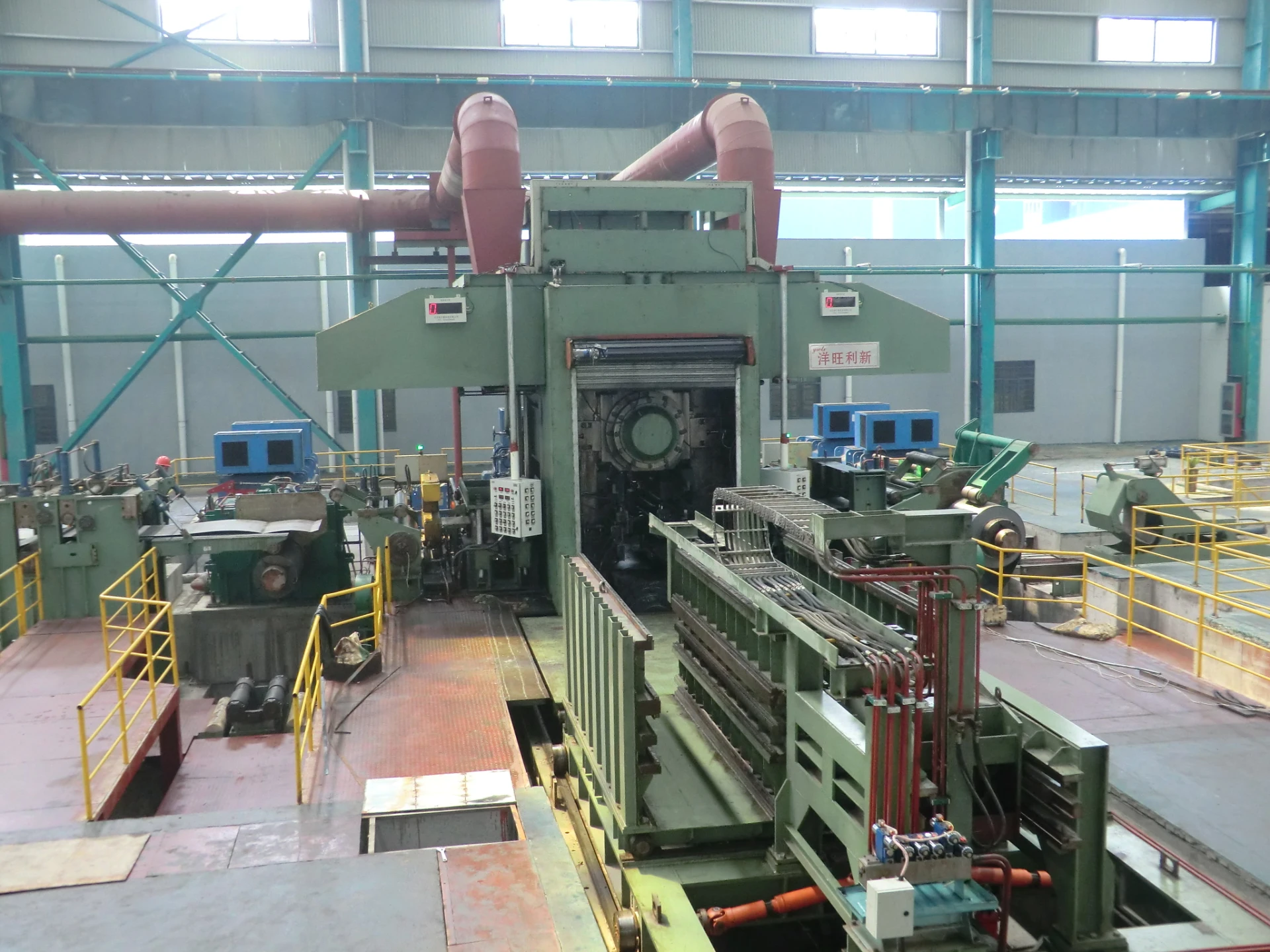
/The electric vehicle (EV) revolution is driving unprecedented demand for advanced steel grades that combine lightweight properties with exceptional strength. To meet these requirements, manufacturers rely on the tandem cold mill , a high-precision rolling system capable of producing ultra-thin, high-strength steel coils with tight tolerances. The tandem cold mill process is particularly crucial in forming materials used in EV battery enclosures, motor housings, and structural reinforcements, where weight reduction without compromising durability is essential. The Pickle Line Tandem Cold Mill: Preparing Steel for High-Strength Applications Before steel can undergo cold reduction, it must first be cleaned of oxides and scale formed during hot rolling. This is where the pickle line tandem cold mill configuration plays a pivotal role. The pickling line uses hydrochloric or sulfuric acid to dissolve surface impurities, ensuring a smooth, defect-free substrate for subsequent rolling. In modern production lines, the pickling line and tandem cold mill operate as a continuous system, minimizing handling and improving efficiency. The pickled coil is fed directly into the tandem rolling mill , where it undergoes progressive thickness reduction. This seamless transition is critical for maintaining material integrity, as any delays between pickling and cold rolling could lead to re-oxidation or contamination. For EV-grade steel, the cleanliness and uniformity achieved by the pickle line tandem cold mill are especially important. Even minor surface defects can compromise the performance of safety-critical components, making the integration of these processes indispensable. The Tandem Cold Mill Process: Achieving Precision and Strength The tandem cold mill process involves passing the steel strip through a series of rolling stands—typically four to seven—each applying controlled pressure to reduce thickness incrementally. Unlike single-stand mills, the tandem rolling mill ensures continuous deformation, resulting in superior mechanical properties and dimensional accuracy. Key Stages in the Tandem Rolling Mill Process Initial Reduction (Entry Stands): The first few stands apply significant thickness reduction, transforming the pickled hot-rolled coil into a thinner intermediate product. Intermediate Rolling (Tension Control): Subsequent stands refine the strip’s gauge while maintaining precise tension to prevent warping or edge cracking. Final Pass (Finishing Stands): The last stand ensures the exact thickness and surface finish required for high-strength EV applications. One of the most critical aspects of the tandem mill rolling process is its ability to enhance steel strength through work hardening. By carefully controlling rolling parameters—such as reduction ratios, rolling speed, and lubrication—manufacturers can produce advanced high-strength steel (AHSS) and ultra-high-strength steel (UHSS) grades that meet the stringent demands of EV components. Advantages of Tandem Rolling Mills for EV Steel Production The tandem cold mill offers several advantages over traditional rolling methods, making it ideal for manufacturing EV-grade steel: 1. Superior Mechanical Properties The progressive deformation in a tandem rolling mill enhances grain structure, resulting in improved tensile strength and formability. This is crucial for EV battery enclosures, which require both high strength and crash resistance. 2. High Production Efficiency Unlike batch processing, the continuous nature of the tandem cold mill process allows for high-volume output with minimal downtime, meeting the automotive industry’s demand for large-scale production. 3. Tight Thickness Tolerances EV components, particularly those used in battery systems, require ultra-precise thickness control. The tandem mill rolling system achieves tolerances as tight as ±1 micron, ensuring consistency across large coil lengths. 4. Flexibility in Material Grades The same tandem rolling mill can process various steel grades, from dual-phase (DP) and martensitic steels to advanced TRIP (Transformation-Induced Plasticity) steels, allowing manufacturers to tailor materials for specific EV applications. Integration of Smart Technologies in Tandem Cold Mills To further enhance precision and efficiency, modern tandem cold mills incorporate Industry 4.0 technologies: AI-Based Process Optimization: Machine learning algorithms analyze rolling parameters in real time, adjusting force and speed to minimize defects. Predictive Maintenance: IoT sensors monitor equipment wear, preventing unplanned shutdowns and extending mill lifespan. Digital Twin Simulations: Virtual models of the tandem rolling mill process allow engineers to test different rolling scenarios before physical production, reducing trial-and-error costs. These innovations are particularly valuable in EV steel production, where material consistency is non-negotiable. Tandem Cold Mills and Sustainable EV Manufacturing As the automotive industry shifts toward sustainability, the tandem cold mill is evolving to support greener steel production. Emerging trends include: Hydrogen-Based Pickling: Replacing traditional acid pickling with hydrogen-based processes to reduce environmental impact. Energy-Efficient Rolling: Using regenerative braking systems in tandem mills to lower power consumption. Recycled Steel Processing: Adapting tandem rolling mills to handle higher percentages of recycled steel without compromising quality. These advancements will ensure that tandem cold mills remain at the forefront of high-strength steel production for the next generation of electric vehicles. Tandem Cold Mills as a Cornerstone of EV Steel Manufacturing The tandem cold mill is an indispensable technology in the production of high-strength steel for EVs. Its integration with pickling lines , continuous processing capabilities, and adoption of smart technologies make it the most efficient and precise method for manufacturing lightweight yet durable steel components. As EV designs continue to evolve—demanding even stronger and lighter materials—the tandem rolling mill process will play an increasingly vital role. By leveraging automation, AI, and sustainable practices, manufacturers can ensure that their tandem cold mills meet the future needs of the electric vehicle industry.

We have successfully executed over 500
projects around the world,
many first-of-their-kind
research projects and products in China, including
We have successfully executed over 500
projects around the world,
many first-of-their-kind
research projects and products in China, including
-
2004
The 1st hydraulic AGC system for hot rolling of ribbon steel
-
2006
The 1st AFC system used for 1450mm skin pass mill
-
2009
The 1st 5-stand tandem line with 2-stand POR & Uncoiler for 650mm ribbon steel
-
2012
The 1st reversing mill for 1380mm strip
-
2016
The 1st soft-rolling system used in skin pass mill
-
2019
The 1st fully automated medium-width tandem cold rolling mill
-
2021
The 1st 5000KN Twin-stand double skin pass mill
-
2022
The 1st coupled pickling line & tandem cold mill with two modes - big roller & small roller



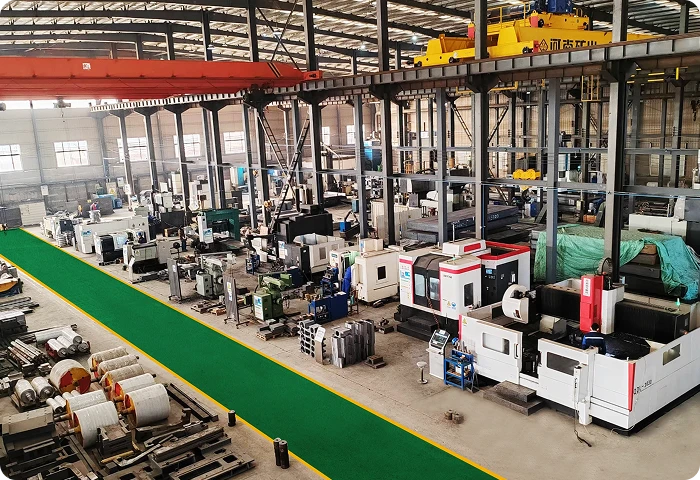
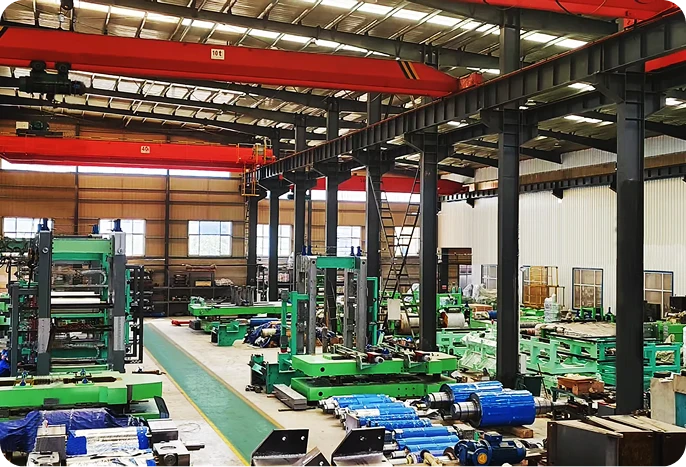
Yang Wang Li Xin operates a state-of-the-art facility over 66,000 square meters,and our manufacturing facility is fully equipped with high-tech machinery and high-capacity cranes. This enables us to handle large work pieces measuring 4.5m in width, 10m in length, and 1.5m in height, guaranteeing our capacity to produce 1800mm skin-pass mills and 1450mm rolling mills. The individual piece can weigh up to 100 tons.


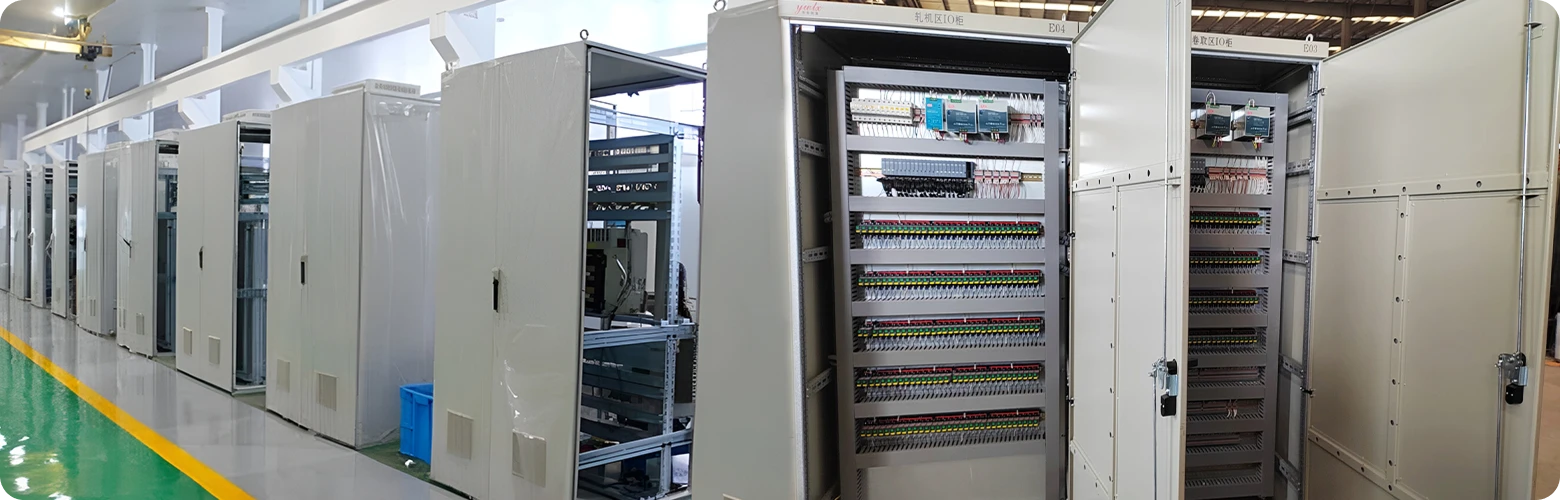
Quality is fundamental to the enterprise survival. We have established a comprehensive and meticulous quality management system and have successfully obtained ISO14000 certification. Starting from the design source, it supervises the entire production cycle, including design, procurement, processing, assembly, in-factory testing, installation, and online commissioning. The workshop is equipped with measuring tools like vernier calipers, spectrometers, hardness testers, and ultrasonic flaw detectors. They are used to check materials and control tolerances to ensure the final equipment meets or exceeds requirements. All products have a unique code, This enables the easy identification and traceability of the equipment components and ensures full control of quality.


-
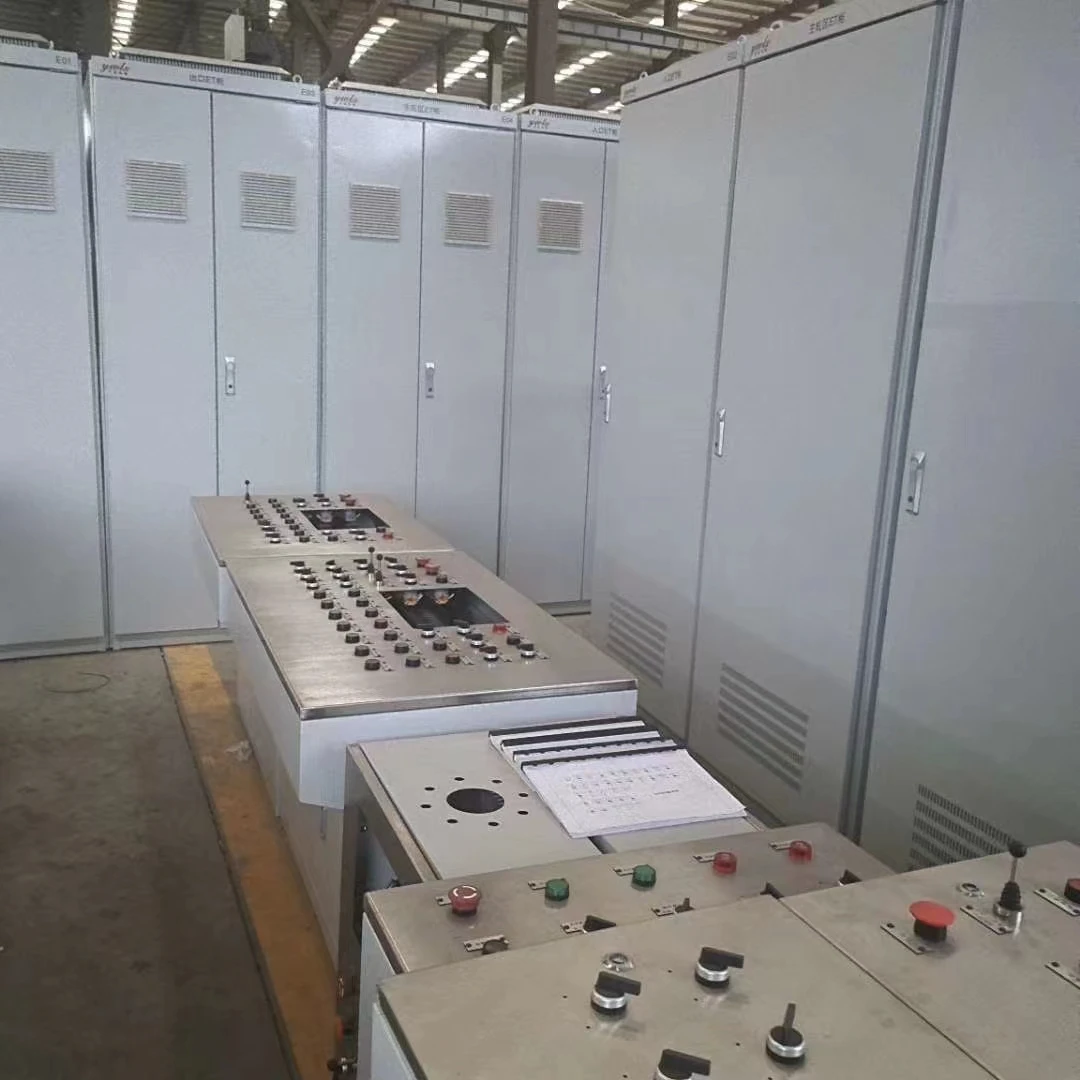 Hot Strip Mill Process FundamentalsAt the heart of this operation lies a precisely orchestrated sequence where slabs reheated to approximately 1250°C undergo progressive thickness reduction across multiple rolling stands. The process begins with slab reheating in walking beam or pusher-type furnaces that establish uniform through-thickness temperatures critical for consistent deformation behavior. As the radiantly heated slabs exit
 -
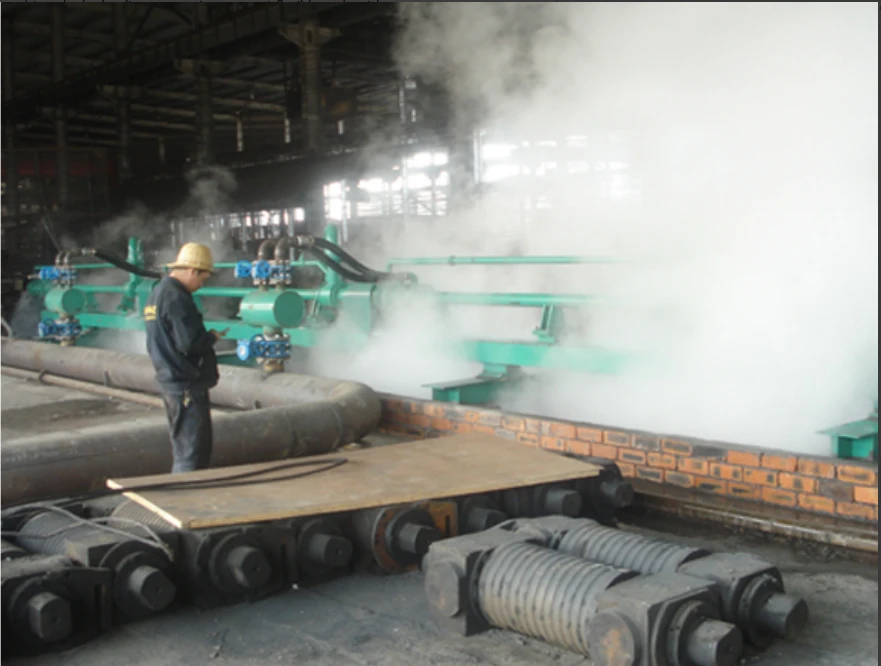 Safety Precautions during Water QuenchingIn the manufacturing of automobile steel, plates, strips, and coils, the water quenching process plays a pivotal role in enhancing the mechanical properties of metals. Understanding what is water quenching and the associated water quenching safety measures is crucial for wholesalers. Yang Wang Li Xin (YWLX) is dedicated to providing advanced solutions in metal processing, and ensuring safety durin
 -
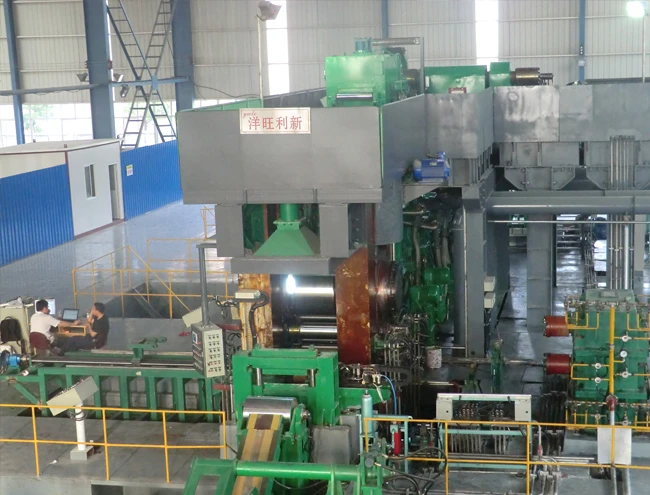 Residual Stress Control and Elimination Methods in Reversible Cold Rolling ProcessThe reversing cold rolling mill is a critical piece of equipment in the production of high-precision metal strips, particularly for applications requiring tight thickness tolerances and superior surface finishes. Unlike a tandem cold mill , which uses multiple stands in sequence, a reversible rolling mill processes the strip back and forth through a single stand, allowing for greater flexibility i


